
Yes. The battery unit in a solar generator can power devices after being charged from a wall outlet, without solar panels connected. The panels replenish its stored energy; they are not required for the outlets to work.
That makes a battery-first setup useful for renters, short outages, and trips where wall charging is available before departure. The important limitation is what happens after the stored energy runs out. Without panels, you need another charging source before the next period of use.
What the Solar Generator Label Includes
In the portable category, a solar generator usually means a rechargeable power station paired with solar panels. The station contains the battery, output connections, and charging controls. The panels collect sunlight and supply charging power through a compatible input.
The battery continues working at night, indoors, and in cloudy weather because its output comes from stored energy. It does not have to receive sunlight at the moment you use it.
Product listings can sell the station alone or offer several panel bundles on the same page. Before comparing packages, check which option is selected. A higher bundle price may include a panel rather than a larger battery, and a panel-only listing does not include the energy storage unit.
Wall Charging Is a Practical Starting Point
For occasional use, charge the station at home before you need it. You can then carry it to a room without a convenient outlet, take it on a short trip, or keep it ready for a brief interruption to utility power.
This approach suits someone who has no useful place to deploy panels. A shaded apartment balcony, for example, may not provide enough sun or space to justify carrying a folding array out every day. Buying the battery first lets you solve the immediate need without forcing a poor solar arrangement.
A solar generator with multiple charging methods also leaves room to add solar later. Decide first what you need the battery to run, then consider how often you will be away from a reliable charging source.
How Long Will It Work Without Solar?
It lasts until the available stored energy is used. Battery capacity and average equipment consumption set the broad runtime, while conversion losses and the station’s own operation reduce the energy delivered to devices.
For illustration, a full 1,024Wh battery powering a steady 150W load gives an estimate of about 5.8 hours when 85% of its nominal capacity is treated as usable. That is a calculated example, not a promise for a particular appliance. A laptop, refrigerator, or other changing load needs an estimate based on its average consumption.
The presence or absence of a panel does not change the battery’s rated output. A station that can run an appliance from its battery can still do so with the panel packed away. What changes is the ability to replenish energy while using the equipment.
This distinction also explains why a short outage and a three-day outage require different plans. A full battery can bridge the first. The longer interruption needs enough additional stored energy or a dependable recharge route.
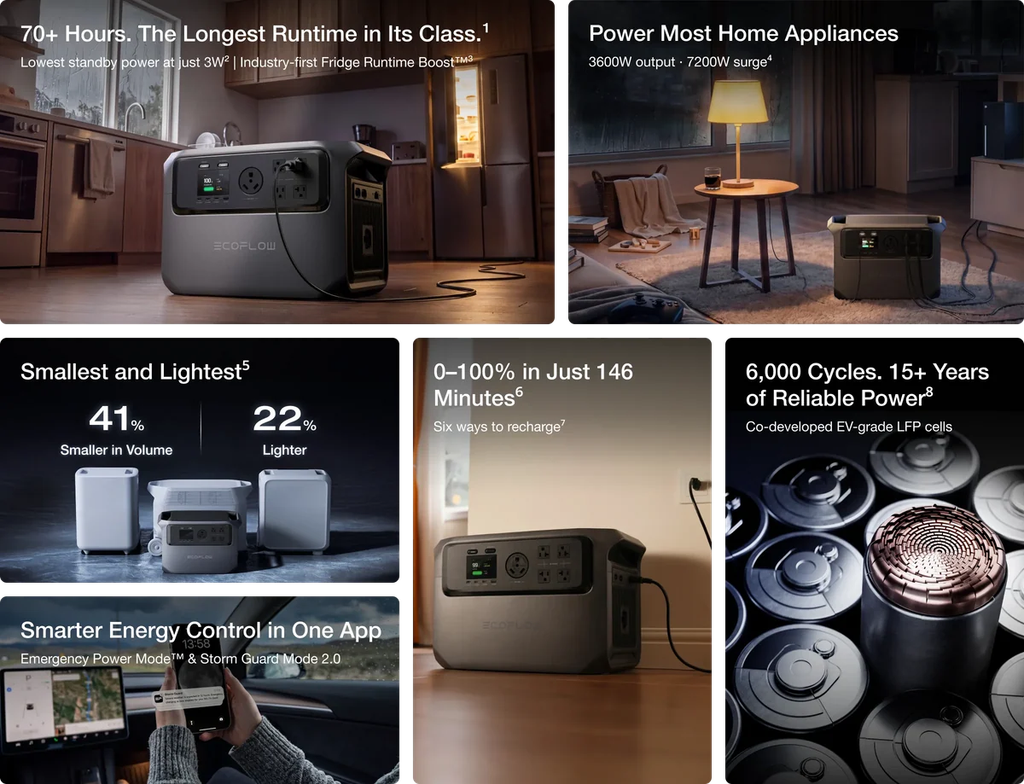
Other Ways to Recharge During a Longer Interruption
Supported vehicle charging can recover energy during a journey. A standard accessory socket provides a relatively modest input, so treat it as a top-up opportunity rather than assuming a short drive will refill a large station. Dedicated alternator chargers offer higher power through a different installation.
A compatible fuel generator can supply AC charging during a longer outage. It remains an outdoor combustion device and must be operated away from doors, windows, and vents. The station then stores energy for use after the engine is switched off.
You can also recharge at another location with working utility power. Consider the station’s weight and charging time if carrying it elsewhere is part of your plan.
These options keep a battery useful without solar panels, but none creates unlimited stored energy. Match the recharge opportunity to how much you expect to use before the next one.
When Adding Panels Becomes Worthwhile
Panels become more attractive when you spend repeated days away from outlets and have a suitable sunny place to use them. The right question is how much daily consumption they can replace.
If a trip consumes about 500Wh each day, a useful array needs to recover that energy with room for charging losses and poor conditions. A panel’s wattage is its rated power, not the number of watt-hours it supplies every day.
Before adding panels, check the station’s solar voltage range, current limit, and accepted power. A matching connector alone does not establish electrical compatibility. Also allow enough cable length to put the panel in sun while keeping the battery dry and ventilated.
Conclusion
You can buy and use the battery unit first, charge it from the wall, and add solar panels when your routine gives them a useful job. For occasional backup, that is a sensible starting point. For repeated off-grid days, plan the recharge method alongside capacity so the station is ready again when you need it.
Read more: https://craftypuns.net/an-easy-method-to-convert-innovative-ideas-to-graphic-content/
https://craftypuns.net/a-better-macbook-workspace-starts-with-the-right-docking-station/
https://craftypuns.net/from-photographs-to-3d-models-understanding-the-craft-of-photogrammetry/

